.png)


Ten Years After Pulse: Remembering the Lives Lost and the Legacy That Endures
By g10 Group Editorial Team
On 12 June 2016, the LGBTQ+ community awoke to devastating news from Orlando, Florida. During Latin Night at Pulse nightclub, a gunman opened fire inside one of the city's most beloved queer venues, killing 49 people and injuring dozens more. It remains one of the deadliest attacks on LGBTQ+ people in modern history and one of the worst mass shootings in United States history.
Ten years later, the names, faces and stories of those lost continue to resonate far beyond Orlando. For many LGBTQ+ people around the world, Pulse was not simply a nightclub. It represented something much deeper: a place of belonging, safety, celebration and community.
As we mark the tenth anniversary of the tragedy, we remember those whose lives were taken, reflect on the impact the attack had on LGBTQ+ communities globally, and recognise how their legacy continues to inspire activism, solidarity and resilience.
A Night That Changed History
Pulse opened in 2004 and quickly became a cornerstone of Orlando's LGBTQ+ community. Founded by Barbara Poma in memory of her brother, who had died from AIDS-related complications, the venue was created as a space where LGBTQ+ people could gather freely and authentically.
In the early hours of 12 June 2016, that sanctuary became the site of unimaginable violence. Many of the victims were young LGBTQ+ people of colour, particularly members of the Latino community who had gathered to celebrate Latin Night.
News of the attack spread rapidly across the world. Vigils were held in cities across the United Kingdom, Europe, North America and beyond. Rainbow flags flew at half-mast. Landmarks were illuminated in tribute. Communities came together in grief, solidarity and determination.
For many LGBTQ+ people, particularly those who had experienced discrimination or violence themselves, the attack felt intensely personal. The tragedy served as a painful reminder that even spaces created for safety can become targets of hatred and extremism.
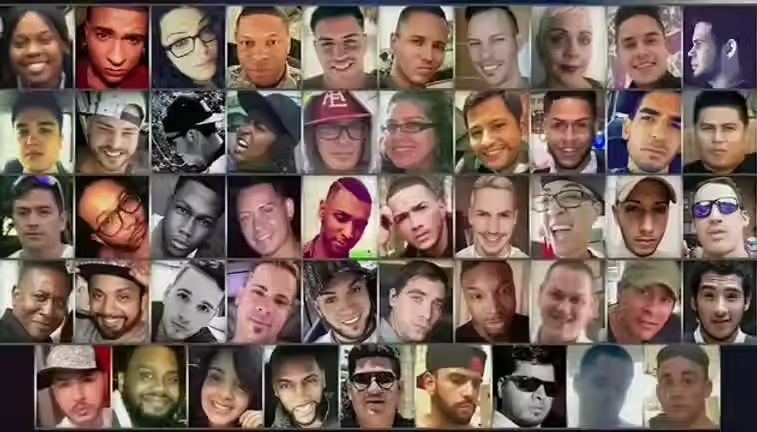
The Human Stories Behind the Headlines
The scale of the attack generated global headlines, but Pulse was always about people. The victims included students, artists, healthcare workers, siblings, partners, parents and friends. They were individuals with dreams, ambitions and futures that were cruelly cut short. Families lost loved ones. Communities lost leaders and friends. Survivors were left carrying physical and emotional scars that continue to affect their lives a decade later.
Many survivors have spoken publicly about the long journey of healing, the challenges of trauma recovery and the importance of preserving the memory of those who never made it home. Their stories remind us that Pulse is not only a historical event. It remains a lived reality for those directly affected.
A Turning Point for LGBTQ+ Visibility
The Pulse shooting occurred during a period of increasing LGBTQ+ visibility and legal progress in many parts of the world. Yet the attack underscored a difficult truth: progress does not eliminate prejudice.
In the years following Pulse, conversations about LGBTQ+ safety, hate crimes and intersectionality gained renewed urgency. The tragedy highlighted the unique vulnerabilities faced by LGBTQ+ people who also belong to racial, ethnic and immigrant communities.
Advocacy organisations used the moment to push for stronger protections against hate crimes, greater support for survivors of violence and increased recognition of the challenges faced by LGBTQ+ people of colour.
The attack also strengthened international solidarity. LGBTQ+ communities from different countries, cultures and backgrounds found common ground in collective mourning and resistance.
The Meaning of Safe Spaces
One of the most enduring legacies of Pulse is the renewed understanding of why LGBTQ+ spaces matter.
For decades, queer bars, clubs and community centres have provided refuge from discrimination and exclusion. They have served as places where people could express themselves freely, find chosen family and build community.
The attack challenged assumptions about safety but also reinforced the importance of preserving and protecting these spaces.
Ten years on, LGBTQ+ venues continue to face economic pressures, political challenges and, in some regions, growing hostility. Yet they remain essential cultural institutions.
Pulse became a symbol not only of loss but also of the ongoing need for spaces where LGBTQ+ people can gather, celebrate and simply exist without fear.


A Legacy of Resilience
If there is one lesson that emerged from the aftermath of Pulse, it is the extraordinary resilience of LGBTQ+ communities.
In the face of grief, people organised vigils, raised funds, supported survivors and demanded change. Artists created memorials. Activists strengthened advocacy efforts. Families transformed their pain into campaigns for remembrance and justice. Across the world, LGBTQ+ people refused to allow fear to define the future.
That resilience remains visible today. From Pride celebrations to community support networks, the spirit of solidarity that emerged after Pulse continues to inspire new generations.
Remembering, Reflecting and Moving Forward
As the tenth anniversary is observed, remembrance remains essential.
Honouring those lost at Pulse means more than looking back. It means continuing the work of creating safer, more inclusive communities. It means standing against hatred in all its forms. It means supporting LGBTQ+ people whose identities place them at the intersection of multiple forms of discrimination.
Most importantly, it means ensuring that the 49 lives taken on that June night are remembered not solely for how they died, but for how they lived.
Ten years after Pulse, the pain of the tragedy has not disappeared. Neither has the love, courage and community that emerged in its aftermath.
Their legacy endures—in every act of solidarity, every fight for equality and every LGBTQ+ person who continues to live openly, proudly and unapologetically.
We remember the 49 lives lost at Pulse nightclub. We honour the survivors. And we reaffirm a simple truth: love, community and resilience will always outlast hate.