Madrid Grand Prix Circuit Changes Planned After Boring Debut Race
The new Madrid Grand Prix had the setting, the ambition and the facilities. What it struggled to produce was the one thing Formula 1 needs most on a Sunday: racing.
After the inaugural event at the Madring, organisers are already prepared to look at changes for next year. The message from drivers was blunt. The circuit at the Ifema exhibition centre near Madrid’s international airport was demanding over one lap, but short on realistic overtaking chances in race trim.
That split reaction matters. F1 can forgive a difficult debut if the foundations are strong. It is much harder to ignore a race that drivers describe as dull.

Drivers liked the challenge but not the race
The main criticism was not that the Madring was too easy. In fact, several drivers appeared to respect the technical challenge of the lap. The problem was what happened when cars ran close together.
Williams driver Alex Albon called the race “pretty boring”. Audi’s Gabriel Bortoleto went further, saying he “almost fell asleep”. Those are not the kind of reviews a new Grand Prix wants after its first weekend.
World champion Lando Norris also offered a sharp assessment. He said one section was “useless” and described the layout as “not a great racetrack”. That points to a familiar street-circuit problem. A layout can feel intense for a qualifying lap, yet still produce a processional race when cars are heavy, tyres are fading and dirty air makes following harder.
Race winner Kimi Antonelli summed up the drivers’ caution around attacking moves. He said the track did not encourage drivers to try passes because contact felt too likely much of the time.
That is a serious issue. F1 drivers are not asking every circuit to become an overtaking festival. Monaco remains famous despite limited passing. But a new permanent slot on the calendar needs a convincing race product, especially when it arrives with high expectations.
The facility won praise from team bosses
The criticism was not universal. Team principals looked beyond the lack of overtaking and praised the event as a whole.
Ferrari team principal Frederic Vasseur said the discussion about overtaking was valid, but called the event “mega” overall. Mercedes team principal Toto Wolff was even more positive, saying that for a first race it was probably one of the best he had seen.
“It’s a temporary circuit. They’ve built something that is challenging for the drivers. A mini Macau or a mini Monaco. The location is good.”
That praise matters because modern F1 events are judged on more than the asphalt. Access, paddock layout, hospitality, transport links, fan areas and broadcast infrastructure all shape how a race is perceived by teams and commercial rights holders.
On those measures, Madrid appears to have made a strong first impression. The Ifema location near the city’s international airport gives the event a practical advantage, especially for teams, media and travelling fans. A temporary circuit also gives organisers more freedom to alter sections year by year, provided the space and safety requirements allow it.

Why overtaking was so difficult
A race can become dull for several reasons, but the comments from the paddock point towards one main theme: the circuit did not create enough clear passing points.
Good overtaking usually needs a few ingredients working together:
A long enough straight Cars need time to gain speed and close the gap.
A heavy braking zone The following driver needs a place to commit to the inside or outside.
Enough track width Drivers need room to run side by side without contact being almost certain.
A corner sequence that allows following If the car behind loses too much downforce before the straight, the move often dies before it begins.
The Madring seems to have offered plenty of technical difficulty, but not enough moments where a driver could set up and complete a clean pass. Antonelli’s comments about the risk of contact are especially telling. If the reward for attacking is small and the chance of damage is high, drivers will usually wait for pit strategy, tyre difference or mistakes.
That is why a layout can be praised on Saturday and criticised on Sunday. Qualifying rewards precision. Racing rewards opportunity.
Organisers say they are open to changes
The most important development is that Madrid’s organisers do not appear to be dismissing the criticism.
Madring managing director Luis Garcia Abad, the former manager of two-time F1 world champion Fernando Alonso, did not respond to BBC Sport’s request for comment on Monday. But after the race he told Autosport that the FIA had clearly identified ways to improve the track layout, and that organisers would be open to changes because the circuit has to be reinstalled next year.
He also made clear that the venue has room to adapt.
“We have the space, we have a venue, we have the facilities, we have the capacity to do it.”
That is the advantage of a temporary track. Madrid is not locked into every kerb, barrier and corner profile forever. If F1, the FIA and the organisers agree on where the layout failed, changes can be made before the next race.
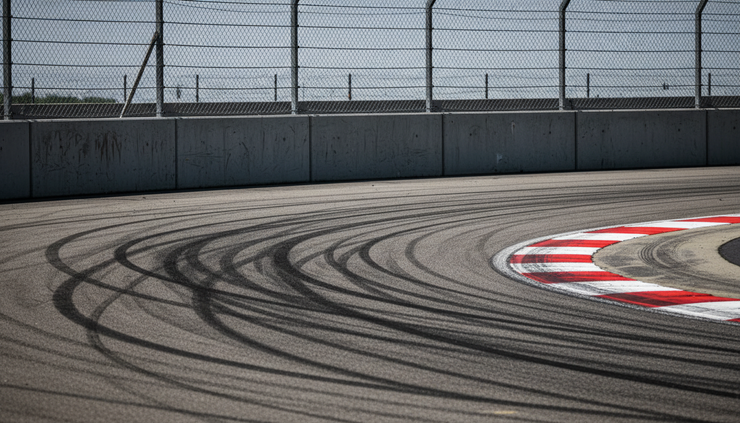
The likely focus will be on creating at least one stronger overtaking zone. That could mean adjusting a corner entry, extending a straight, widening part of the circuit or removing a sequence that interrupts a potential passing run. The brief from drivers is clear enough: keep the challenge, but give them somewhere to race.
The first year was a warning rather than a failure
It would be too harsh to call the Madrid debut a failure. By several accounts, the event infrastructure worked well and the venue impressed important figures in the paddock. That is not a small achievement for a new race.
But the racing problem cannot be treated as a minor complaint. When multiple drivers say the race was boring, the organisers have to respond. F1 has worked hard in recent years to sell every Grand Prix as an event, but the sport still lives or dies by what happens between the lights going out and the chequered flag.
Madrid now has a clear task. It does not need to turn the Madring into a generic circuit with easy DRS passes every few laps. It needs to find a better balance between difficulty and raceability.
A “mini Macau or mini Monaco” may sound exciting, and for qualifying it may well be. For a full Grand Prix distance, fans need more than tension in the barriers. They need the sense that a chasing driver can try something and make it stick.

What Madrid must get right next
The Madrid Grand Prix has a strong base. The location is convenient, the facility drew praise and the circuit gave drivers a serious challenge. Those are valuable pieces.
Now the layout needs sharper racing logic. One credible overtaking zone could change the whole character of the event. A revised section that lets cars follow more closely could turn frustration into tension. Small changes can matter when the problem is flow rather than the whole concept.
The organisers have already signalled that they are willing to work with F1 and the FIA. That is the right response after a debut that impressed off track but disappointed on it.
The takeaway is simple: Madrid does not need to start again. It needs to listen, adjust and make sure next year’s Grand Prix gives drivers a reason to attack.



Comments