.png)
Flooding Hits 2 1 Million People Across 20 Provinces as Thailand Speeds Recovery
More than 2.1 million people remain affected by flooding across Thailand, even as water levels begin to fall in every province currently listed as damaged by the disaster.
The Department of Disaster Prevention and Mitigation, or DDPM, said on 17 October 2026 that flooding was still affecting 704,699 households, equal to 2,148,896 people, across 20 provinces and Bangkok. The agency said officials were speeding up recovery work while preparing records needed for financial relief.
DDPM director-general Nirat Pongsitthaworn said the flooding had been prolonged by heavy to very heavy rain, as well as runoff from the North flowing down into the Central region. While the situation remains serious, the reported drop in water levels offers a clearer path towards cleanup, damage assessment and support for affected families.

The latest DDPM figures show the scale of the flooding
DDPM’s figures, recorded at 6am Bangkok time, show that the flood impact remains wide and uneven. The agency’s data covered 89 districts, 728 subdistricts and 5,577 villages in the 20 affected provinces.
Bangkok was also included in the nationwide total. The capital accounted for three affected districts and 16 affected subdistricts, with those households counted as part of the overall national figure.
Area measured | Latest figure reported by DDPM |
Affected households | 704,699 |
Affected people | 2,148,896 |
Affected provinces | 20 |
Affected provincial districts | 89 |
Affected provincial subdistricts | 728 |
Affected villages | 5,577 |
Affected Bangkok districts | 3 |
Affected Bangkok subdistricts | 16 |
These numbers matter because recovery planning depends on local records. Relief payments, household assistance, infrastructure repairs and supply distribution all need confirmed lists of affected areas and residents.
For many communities, the emergency phase does not end when rain stops. Roads may stay flooded. Homes may need cleaning and repair. Electrical systems, farm equipment, water pumps and household goods may be damaged. Local authorities also need time to check public facilities, including roads, bridges, schools and health centres.
Why the flooding has lasted so long
Thailand’s flood situation has been shaped by two connected pressures.
The first is heavy to very heavy rainfall, which can overwhelm drainage systems, rivers, canals and low-lying farmland. The second is runoff from the North. When water from upper catchments flows into the Central region, communities downstream can remain flooded even after local rain eases.
This pattern often stretches a flood event across several phases. Rain causes the initial rise in water. Runoff then pushes more water into rivers and floodplains. In low-lying districts, drainage can take longer, especially where water must move through channels already carrying high volumes.
DDPM said water levels were falling in all 20 affected provinces and in the three affected Bangkok districts. That is a positive sign, but it does not mean every community has returned to normal. Falling water still needs somewhere to go, and flooded neighbourhoods may face days of pumping, cleaning and inspection before everyday movement becomes safe again.
The situation also shows why flood response in Thailand often depends on coordination between national agencies, provincial authorities, Bangkok officials and local volunteers. Water does not follow administrative borders, so recovery work must track both the movement of water and the needs of people on the ground.
Recovery work is now moving alongside emergency response
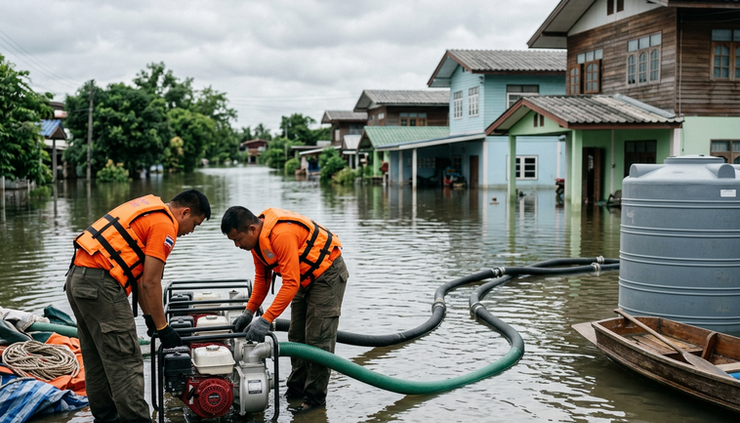
DDPM has deployed personnel and disaster-response machinery to assist communities while continuing to monitor weather and water conditions.
That work can include moving pumps, boats, vehicles and heavy equipment into areas where access remains difficult. In many places, the immediate priorities are practical and urgent:
helping people move through flooded areas safely
draining water where conditions allow
clearing blocked routes and canals
supporting local distribution of essential supplies
checking damage to homes and public infrastructure
preparing verified records for financial relief
The records are especially important. Financial assistance usually depends on confirmed household impact, local inspection and official documentation. When thousands of villages are affected, the process takes careful coordination.
The DDPM figures also help show where resources may be needed most. Large numbers of affected households do not always tell the full story, since some areas may face deeper water, damaged access routes or longer recovery times than others. Still, a national count gives authorities a common picture for decision-making.
Falling water levels bring relief but also new risks
As floodwater drops, attention often shifts from rescue and access to cleanup and safety. This is a difficult stage for households because the damage becomes more visible.
Mud, debris and contaminated water can remain inside homes. Wooden furniture, mattresses and electrical appliances may be unusable. Shops and small farms may need to assess stock, tools and equipment. Families may also need official confirmation of damage before relief can move forward.
There are safety concerns too. Flooded roads can hide holes, sharp debris or damaged surfaces. Electrical systems may be unsafe after contact with water. Children, older people and people with disabilities may need extra help during cleanup, especially in homes where floors remain slippery or access is limited.
For local authorities, the next phase usually brings a long list of field checks. Teams may need to inspect drainage points, public buildings and road links. They may also need to prioritise areas where water has fallen enough for repair crews to enter.
This is why the latest update is mixed. The national picture is improving, because water levels are falling. At the same time, the human impact remains large, with more than 700,000 households still counted as affected.
What to watch in the days ahead
The key question now is whether falling water levels continue across the affected areas. DDPM said it is still monitoring weather and water conditions, which will shape how quickly recovery can move.
Several signals will matter:
whether runoff from northern areas continues to pressure the Central region
whether more heavy rain affects already flooded districts
how quickly pumps and drainage channels can reduce standing water
how fast local damage records can be completed
whether transport routes reopen for residents and relief teams
The flood response is now entering a stage where speed and accuracy both matter. Communities need quick support, but relief records must also be clear enough to avoid delays and confusion later.
For households caught in the floods, the falling water levels offer the first sign of relief. For officials, they mark the start of another demanding phase: restoring access, confirming damage and getting financial help to the people who need it.



Comments